Today I met with a group of preservation professionals at our historic cemetery. Preservation Maryland is sponsoring a conference in May and one of the highlights is a hands-on workshop at Old Saint Paul's Cemetery. Here is a link to the program information for those who might want to attend. www.preservationmaryland.org/html/conference.html For those of you who haven't visited this wonderful oasis in the heart of downtown Baltimore, you are missing a special treat. Each time I visit, it is a delightful, spiritual, and aesthetic experience. Here lie our parishioners of 200 years ago. I remain hopeful that this place will play a larger role in the life of our parish and I would welcome your ideas. Originally called the Western Burying Grounds, this cemetery was created on the western outskirts of Baltimore Town in 1800. The prior cemetery was located next to the church, near today's Old Saint Paul's. Among those buried here are John Eager Howard, Revolutionary War hero, Governor, and U.S. Senator; Samuel Chase, signer of the Declaration of Independence and George Armistead who was the commander of Fort McHenry during the War of 1812 British bombardment that inspired Francis Scott Key. Key was buried here until being moved to Greenmount Cemetery in the late 19th century. Lewis Armistead, brother of George, was a colonel in Lee's Army of the South who fought in several famous battles before being mortally wounded during "Pickett's Charge" at Gettysburg. Lewis is buried next to his brother George . There are many fascinating stories connected with those who lie in th
Friday, April 24, 2009
Resting Place
Today I met with a group of preservation professionals at our historic cemetery. Preservation Maryland is sponsoring a conference in May and one of the highlights is a hands-on workshop at Old Saint Paul's Cemetery. Here is a link to the program information for those who might want to attend. www.preservationmaryland.org/html/conference.html For those of you who haven't visited this wonderful oasis in the heart of downtown Baltimore, you are missing a special treat. Each time I visit, it is a delightful, spiritual, and aesthetic experience. Here lie our parishioners of 200 years ago. I remain hopeful that this place will play a larger role in the life of our parish and I would welcome your ideas. Originally called the Western Burying Grounds, this cemetery was created on the western outskirts of Baltimore Town in 1800. The prior cemetery was located next to the church, near today's Old Saint Paul's. Among those buried here are John Eager Howard, Revolutionary War hero, Governor, and U.S. Senator; Samuel Chase, signer of the Declaration of Independence and George Armistead who was the commander of Fort McHenry during the War of 1812 British bombardment that inspired Francis Scott Key. Key was buried here until being moved to Greenmount Cemetery in the late 19th century. Lewis Armistead, brother of George, was a colonel in Lee's Army of the South who fought in several famous battles before being mortally wounded during "Pickett's Charge" at Gettysburg. Lewis is buried next to his brother George . There are many fascinating stories connected with those who lie in th
Monday, April 13, 2009
The Hunt.
I thought I would dabble a bit in a bit of Easter Egg and other secular history about this important Christian holiday and after a very superficial research project wish to put forth the following factoids.
The ancient Persians painted eggs for Nawrooz, their New Year celebration, which falls on the Spring equinox. The Nawrooz tradition has existed for at least 2,500 years.
The pre-Christian Saxons had a spring goddess called Eostre, whose feast was held on the Vernal Equinox. Her symbolic animal was the spring hare (read “bunny”). Some believe that Ēostre was always associated with eggs and hares. Hmmmm. I always wondered how rabbits and eggs came to be linked to Easter.
The English name for the festival of Easter derives from the Germanic word Eostre. It is only in Germanic languages that a derivation of Eostre occurs in the name of our Christian holiday. Most European languages use a term derived from the Hebrew pasch meaning Passover. In Spanish, for example, it is Pascua; in French, Pâques and in Dutch, Pasen.
Pope Gregory the Great reportedly directed his missionaries to absorb older pagan festivals and merge them into Christian rituals where possible. The Christian celebration of the Resurrection of Christ was ideally suited to be merged with the Pagan feast of Eostre.
In any event, the egg is an ongoing symbol of new life and that is exactly what was surrounding us yesterday at The Hunt.

Fine Print: The foregoing represents the author’s somewhat informal meanderings in topics that he is unqualified to report on. Any discovered factual errors should not be reported to the author and should be kept to oneself. Any accusations of plagiarism or the like will be disregarded totally by the writer and will not be contested nor apologized for. The same holds true for missspelllings, typos, and other nit-picky rubbish.
Thursday, April 9, 2009
Ode to a Copier
Our wonderful talented Maestro Dan Fortune made reference to this piece that appeared in Episcopal Cafe about a topic that he knows well from first hand experience.Many of you know Father Schenck from his OSP days. Enjoy.
Father Tim Schenck writes on his blog "Clergy Family Confidential" the following:
Ode to a Copier A Prayer for Holy WeekHoly Week, dear friends, will soon draw nigh;
From St. Mark’s-in-the-Bowery to Christ Church, Shanghai.
Parish secretaries and their rectors, too,
Thinking of the bulletins that will ensue,
Drop to their knees and begin to quake,
Praying their copiers will stay awake
Through Maundy Thursday and the rest;
Without behaving as if possessed.
Rectors wonder with uncertainty,
“Should I have purchased the extended warranty?”
Misfeeds, toner woes and a paper jam
Always seem to accompany the Paschal Lamb.
Why this happens is a great unknown,
A mystery worthy of the bishop’s throne.
So stoke the incense, say your prayers;
anything to stave off copier repairs.
As the dark shadows of Tenebrae now approach;
may your copier behave without reproach.
And as we begin the Good Friday fast,
May it wait ‘til Low Sunday to breathe its last.Here is the link: http://www.episcopalcafe.com/lead/saturday_collection/saturday_collection_4409_1.html
Have a wonderful Holy Week!
FC
Wednesday, April 1, 2009
The Robots are coming!!!
Well folks it looks like we lost. You may have heard that for the past five years we have waged a campaign against developer David Hillman's plans to build a "robotic garage" next to our 1791 Old Saint Paul's Rectory building. Several weeks ago the plans received approval from the city's Urban Design and Architecture Review Panel, some of whose members continued to have issues with the design. However, they are now out of the loop and the Planning Department is in control and is determined to move this project forward come hell or holy water.According to the Baltimore Sun "after the meeting, developer David H. Hillman said he had received verbal approval for his garage from the administration of former mayor and now Gov. Martin O'Malley. "The garage was part of a deal I made when I said I would buy and renovate the Baltimore Gas and Electric Company Building." He said that building, on nearby Lexington Street and converted into apartments, needs parking for tenants."
Apartments are part of the project and will face Saratoga street.
So, as they say "you can't fight city hall". WE TRIED.
Here is a rendering of the proposed design.
Tuesday, March 17, 2009
Happy Saint Patrick's Day


From Wikipedia, the free encyclopedia
Saint Patrick (c. 390 - 460)[2] (Latin: Patricius,[3] Irish: Naomh Pádraig) was a Roman Britain-born Christian missionary and is the patron saint of Ireland, along with Brigid of Kildare and Columba. He was educated at a monastery and school of divinity founded by Illtud (now Llantwit Major).
When he was about 16 he was captured by Irish raiders and taken from his native Wales as a slave to Ireland, where he lived for six years before escaping and returning to his family. After entering the Church, he later returned to Ireland as a missionary in the north and west of the island, but little is known about the places where he worked and no link can be made between Patrick and any church.
By the eighth century he had come to be revered as the patron saint of Ireland. The Irish monastery system evolved after the time of Patrick and the Irish church did not develop the diocesan model that Patrick and the other early missionaries had tried to establish.
The available body of evidence does not allow the dates of Patrick's life to be fixed with certainty, but it appears that he was active as a missionary in Ireland during the second half of the fifth century. Two letters from him survive, along with later hagiographies from the seventh century onwards. Many of these works cannot be taken as authentic traditions. Uncritical acceptance of the Annals of Ulster would imply that he lived from 340 to 460, and ministered in what is modern day northern Ireland from 428 onwards.
Saint Patrick's Day (17 March) is celebrated both in and outside of Ireland, as both a liturgical and non-liturgical holiday. Outside of Ireland, it can be a celebration of Ireland itself. In the universal Roman Catholic Church it is an optional memorial, though in the dioceses of Ireland it is a both a solemnity and a holy day of obligation.
Monday, March 16, 2009
The Church on the Hill ~ 1752

In this engraving (click photo to enlarge) that was produced from a rather primitive sketch by John Moale in 1752, we see the fledgling new development called Baltimore Town. In their wisdom the Vestry of St Paul's Church decided to relocate from what is now Dundalk to Lot 19 in the new town. This parcel was on high ground at the northern end of town. The most prominent building in Moale's representation is the first church that was built on the exact same site as our present Old Saint Paul's.
Tuesday, March 10, 2009
Desiderata and Old Saint Paul's

For text and some info go to-
Desiderata is Latin for "Things to be Desired."
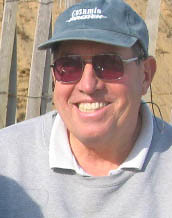
My name is Fred Craig. As the current Junior Warden of Old Saint Paul’s Episcopal Church in Baltimore I am responsible for oversight of “buildings and grounds” that are owned by our historic church. You can be well assured that my list of things to be desired is quite extensive and has grown during my four years as the Junior Warden. Money has always been elusive for bricks and mortar needs and is not becoming less so during the current economic trials. I have two more years to serve as Junior Warden and "have the intention" to blog about what is going on in the physical realm of our church. The “Desiderata” an inspirational writing that has often been mistakenly associated with our church has provided me with a name for this blog that I will use to relate facts, fables and history about our buildings and grounds and hopefully generate interest and participation on the part of the parishioners. I welcome your comments and participation.
Fred Craig